Prior to testing, or whilst the air receivers are being charged, the following actions should be carried out:
Whole building tests
-
Open all interior doors and openings to allow for the flow of air between rooms.
-
Close or seal up any purposely provided ventilation as per the testing protocol being followed (e.g. CIBSE TM23 or IAA Background Ventilation Assessment).
-
Measure the building geometry accurately as per the Enclosure Geometry section. This information will be entered into the software when running tests.
-
Inform current building occupants of the imminent testing. You may also wish to warn them of the noise made during testing, as some occupants may find this disconcerting if they are not warned. In occupied premises where pets are present, it is advisable to keep them away from the air release to avoid distress.
-
You may wish to place signs on external doors to ensure nobody enters during testing, which would void a test.
Single room tests
-
Open a single external door or large window, so that the pressure difference is only created between the room being tested and the rest of the building.
-
Close or seal up any purposely provided ventilation as per the testing protocol being followed (e.g. CIBSE TM23 or IAA Background Ventilation Assessment).
-
Measure the room geometry accurately as per the Enclosure Geometry section. This information will be entered into the software when running tests.
Example sealing up
Ventilation devices that you want to exclude from the test must be closed or sealed up using air sealing tape. The photos below show examples of recommended sealing procedures:
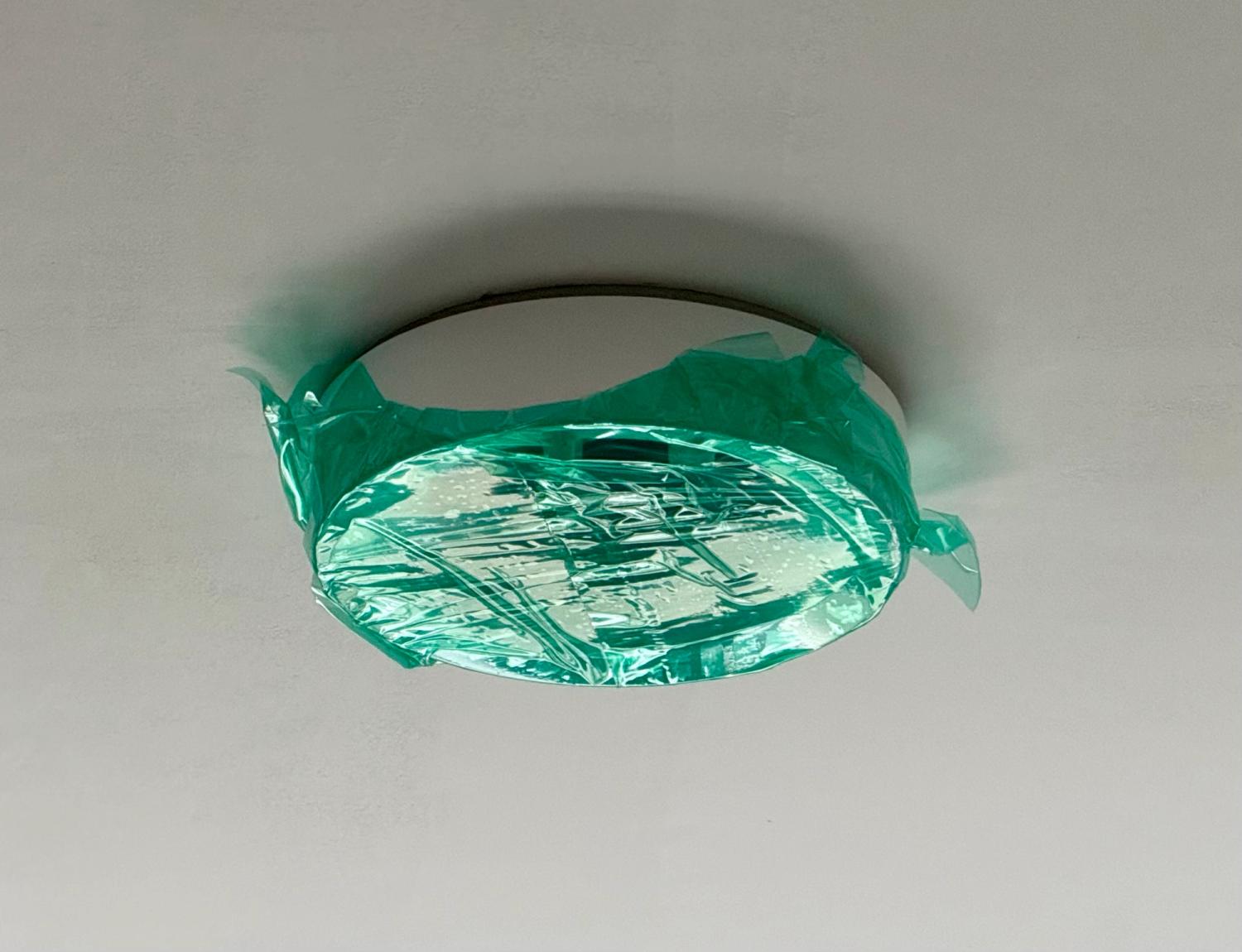
Passive vents
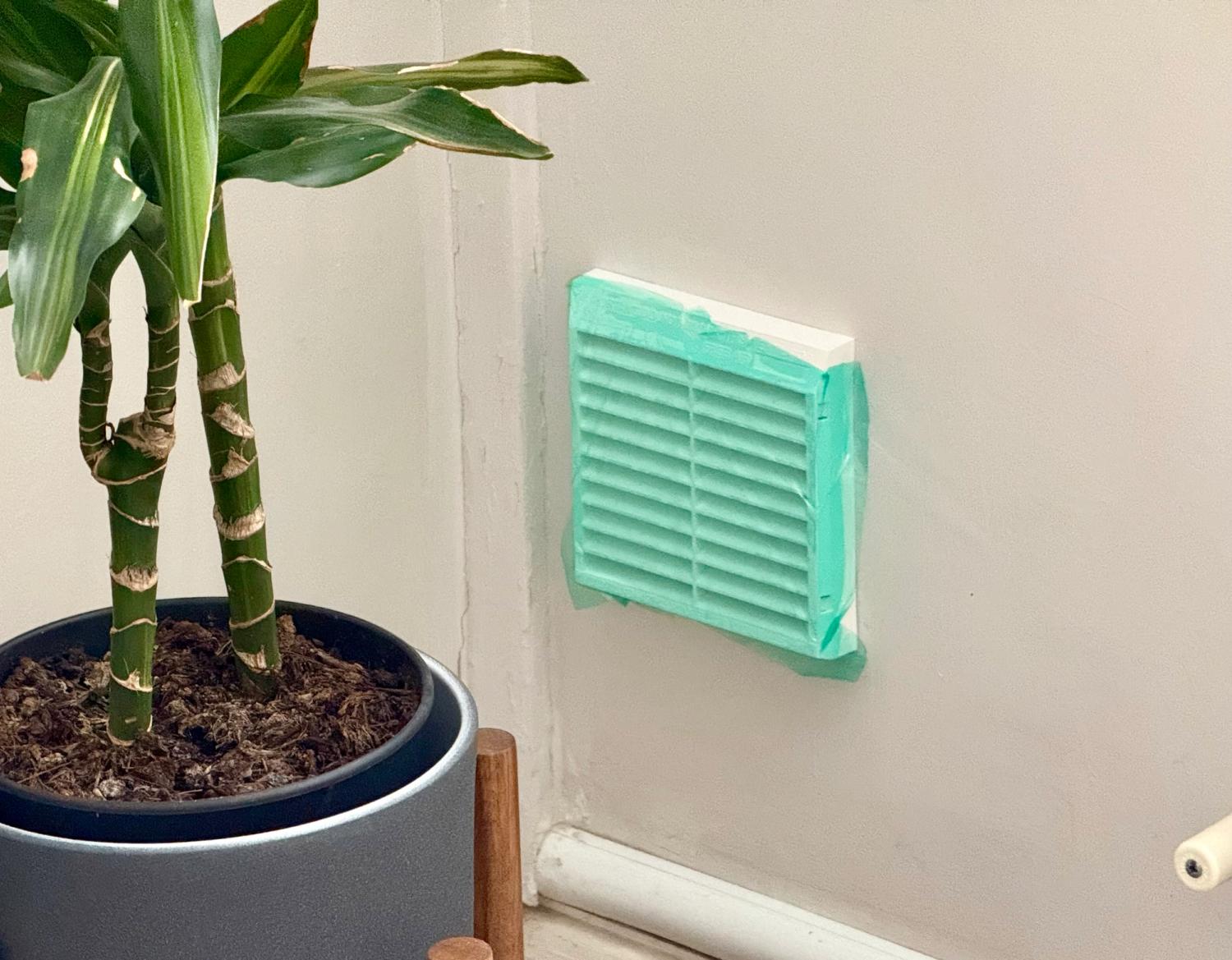
Mechanical ventilation outlets

Enclosure geometry
Regardless of the type of enclosure being tested, the overall dimensions of the space are an essential input to a Pulse test. The dimensions required are the internal volume and envelope area of the conditioned space, and these must be measured precisely to produce an accurate result.
For a whole-house test, the entire dwelling should be measured, including the main dwelling and any extensions or loft conversions, but not unconditioned spaces (such as garages, unheated conservatories, outbuildings, or cold roofs).
For room-only tests, the dimensions required are those of the room itself. Similarly, for commercial buildings or other enclosures, the dimensions are defined by the extent of the space that is being tested.
The specific measurement method will depend on the airtightness standard that is being followed (e.g. Cibse TM23, ISO 9972, etc), but the following measuring techniques are provided for guidance:
Measuring volume
The volume is measured as the total internal volume, in cubic metres, of the building envelope or part of the building being tested.
No subtraction is made for any of the following:
- Internal wall areas
- Intermediate floor height (for multi-storey buildings)
- Furniture or other internal objects
- Other voids or cavities
[EXAMPLE PICTURE]
Measuring envelope area
The envelope area encompasses the total surface area, in square metres, of all the boundary walls, floors and ceilings of the building envelope or part of the building being tested.
Internal walls are excluded unless they form part of the external barrier, such as an integral garage wall, a plant room, or other unconditioned space.
The surface area of party walls between terrace, end-terrace and semi-detached properties should be included in the total envelope area. In apartments of a multi-story building, the surface area of all walls, floors and ceilings that adjoin neighbouring apartments should also be included.
[EXAMPLE PICTURE]
For more detailed information on how to measure dimensions, refer to your Pulse training material.

