Turn the air compressor off by rotating the power switch to the OFF position.
Switch off the mains power supply at the wall socket or power outlet.
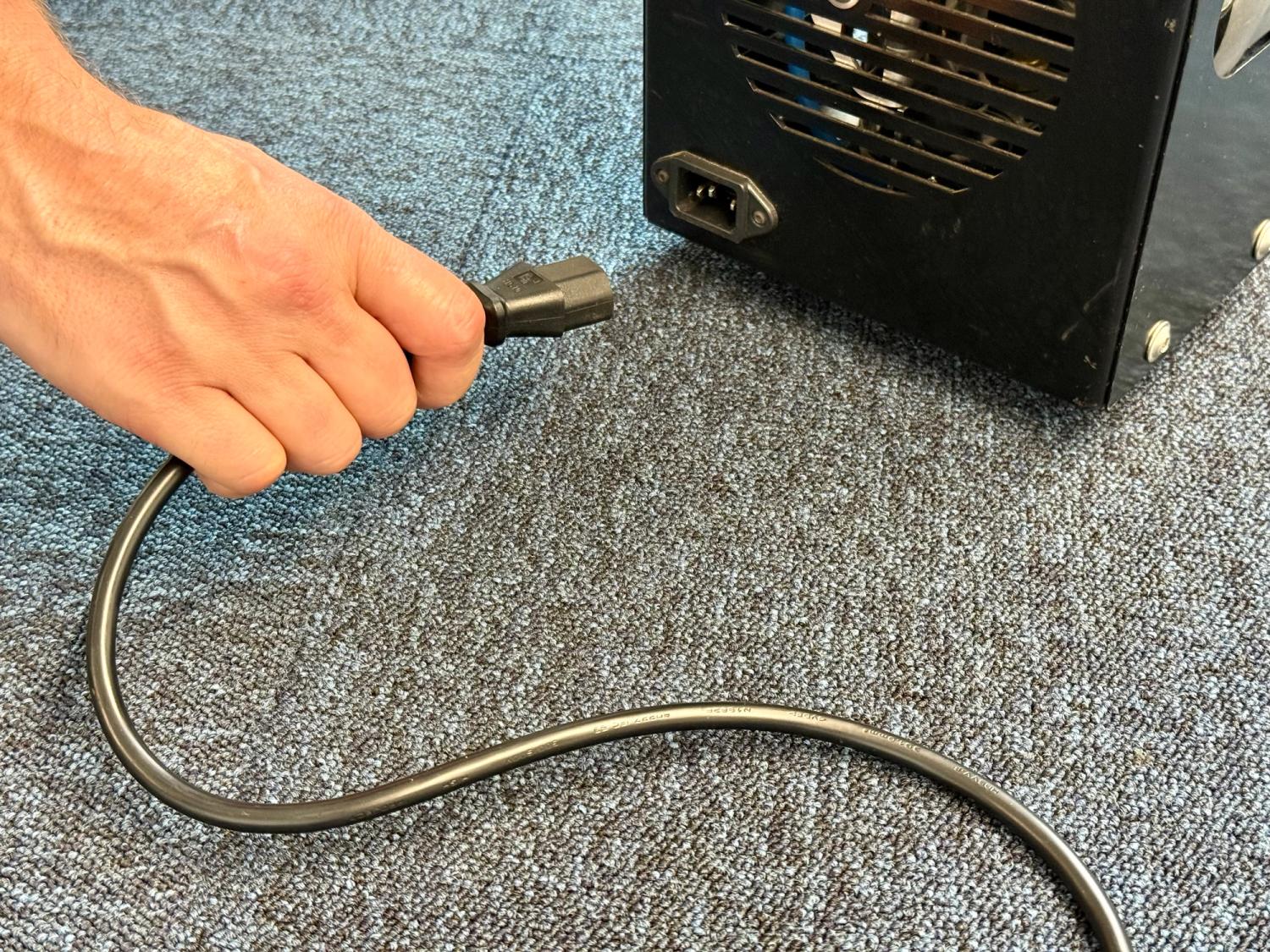
Unplug the mains power cable from the power inlet on the side of the compressor.
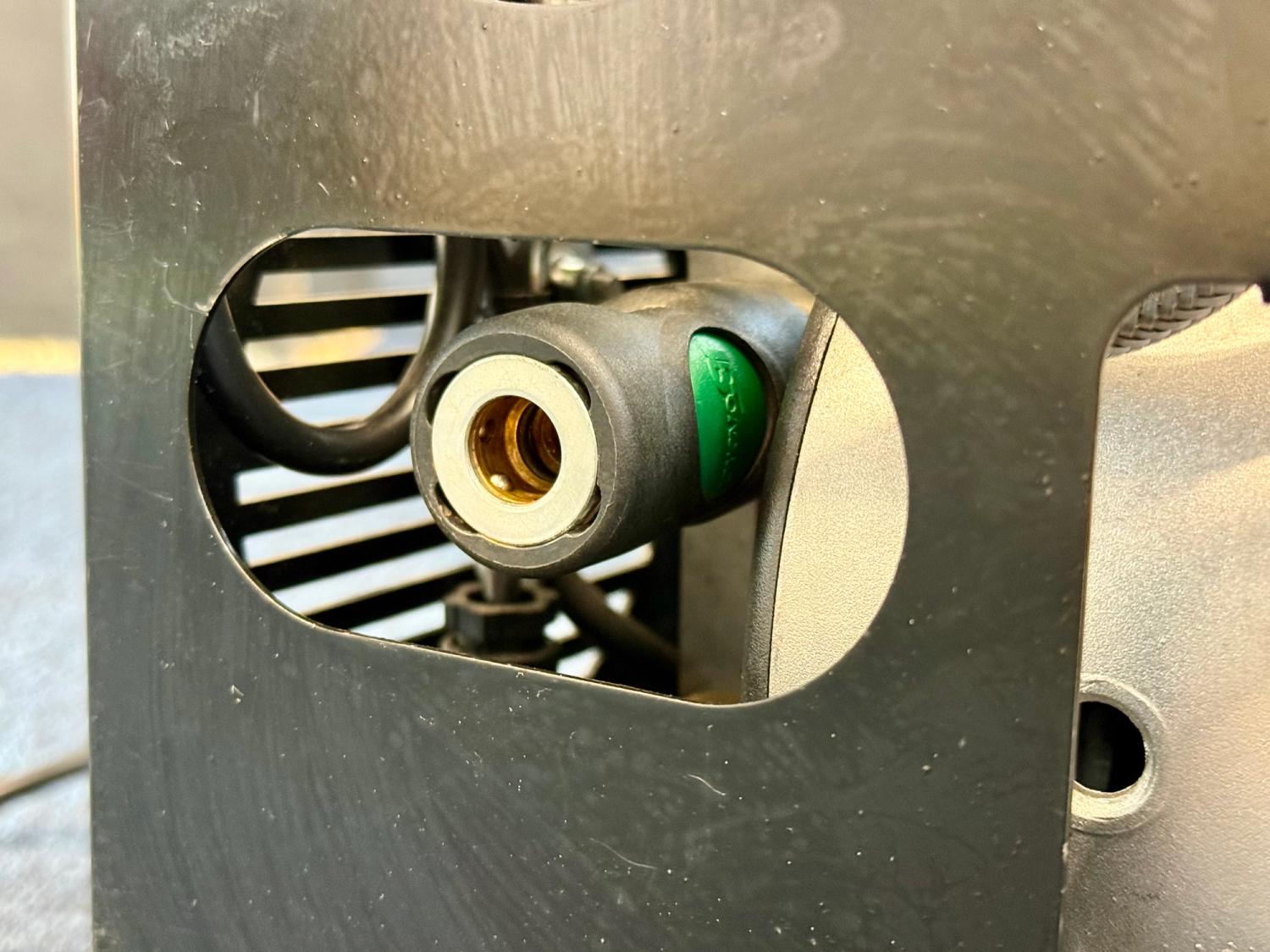
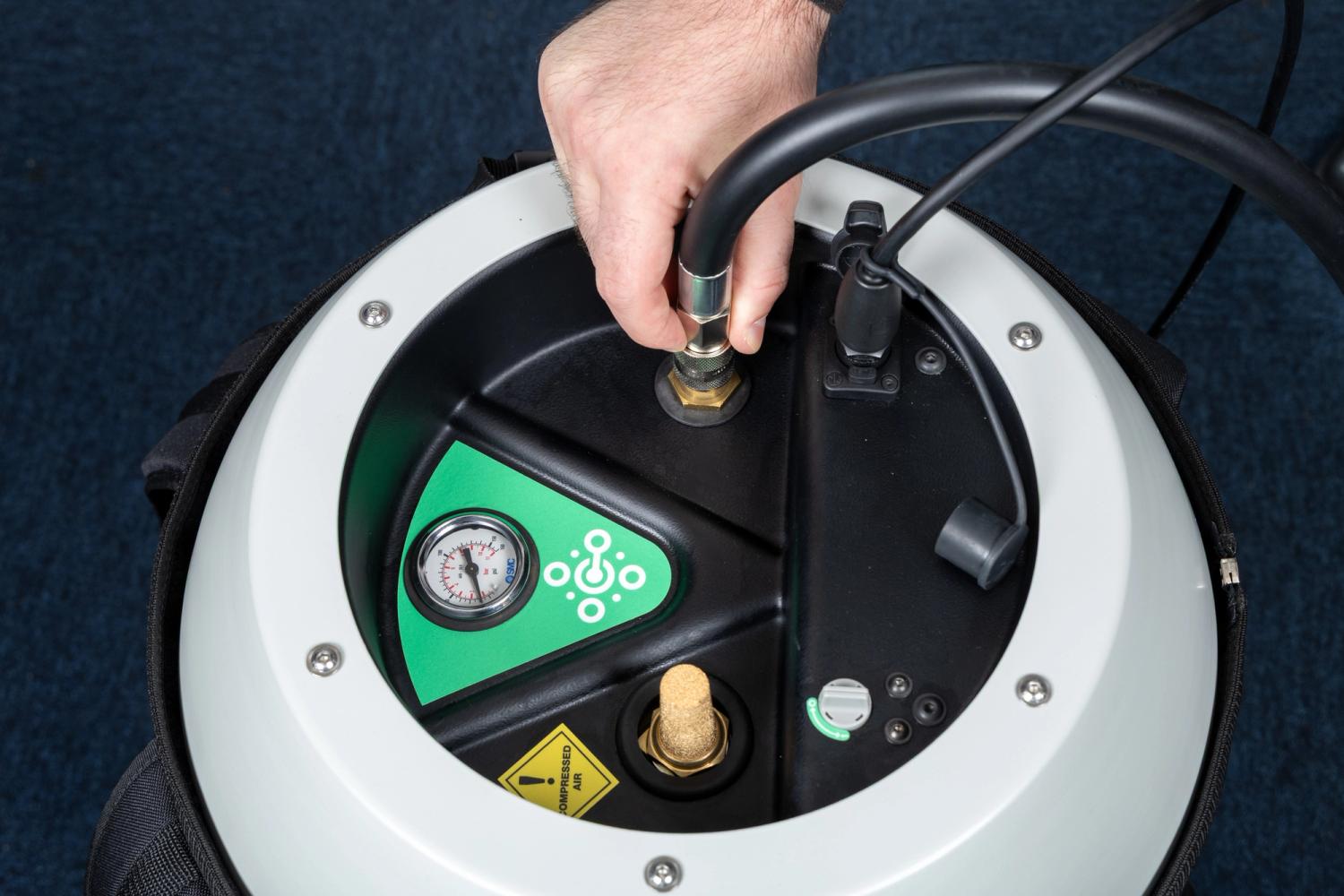
Disconnect the compressed air hose by pressing the green button on the side of the socket and gently pulling the hose connector out of the socket.
Do not attempt to disconnect the air hose without pressing the green button on the side of the socket, as this could damage the compressor or hose connector.
Switch off the mains power supply at the wall socket or power outlet.
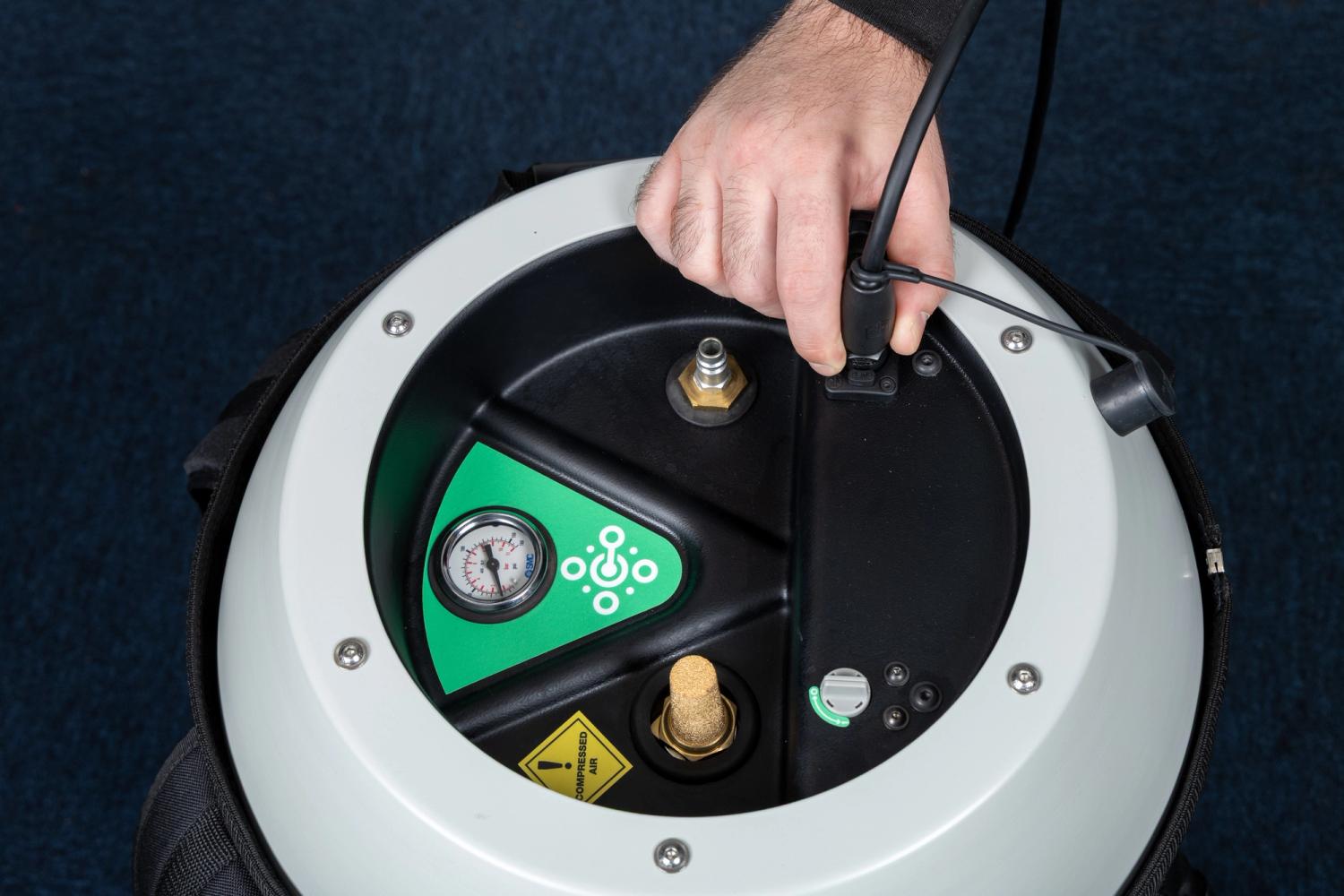
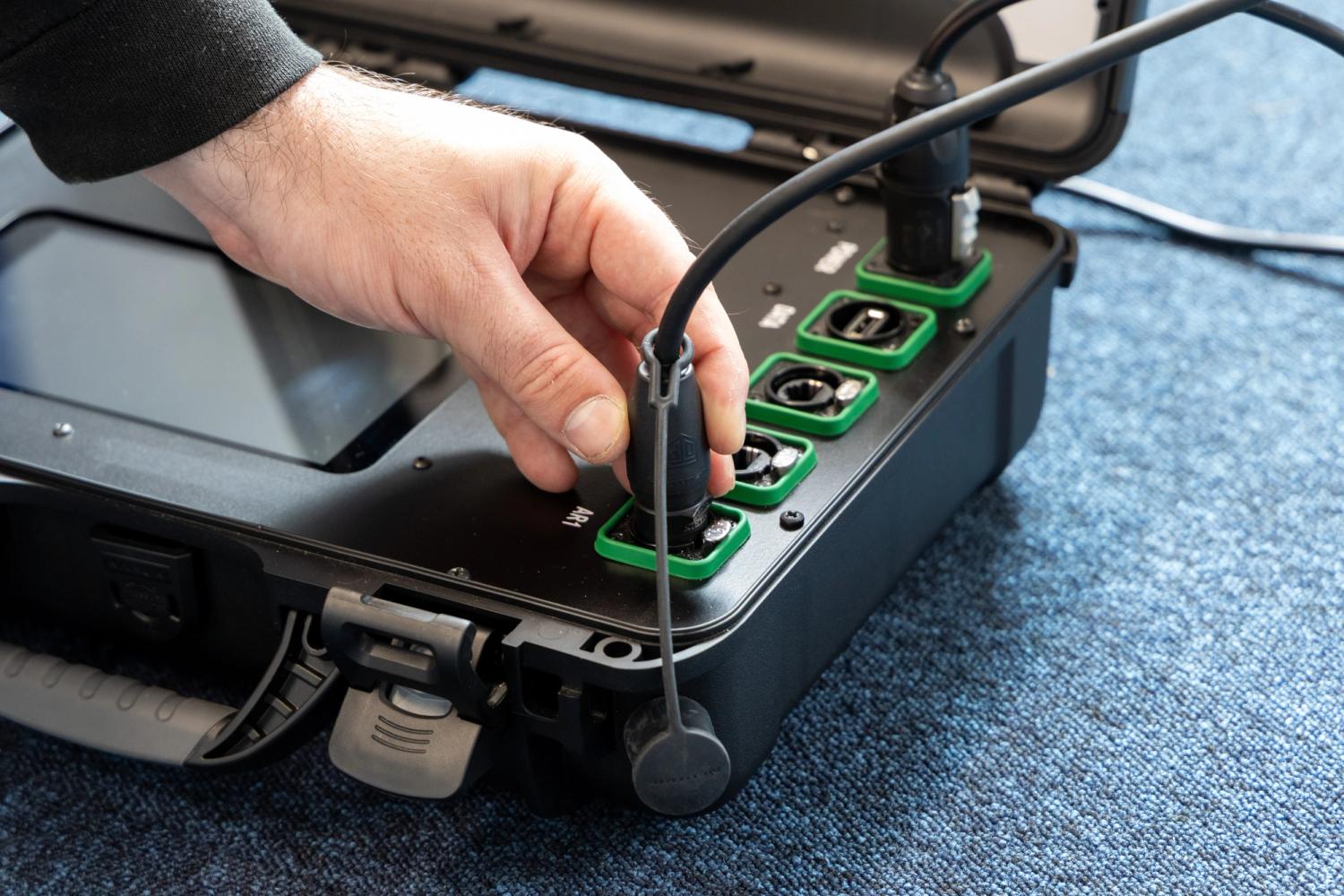
Disconnect the interconnect cable by pressing the metal release button on the AR socket.
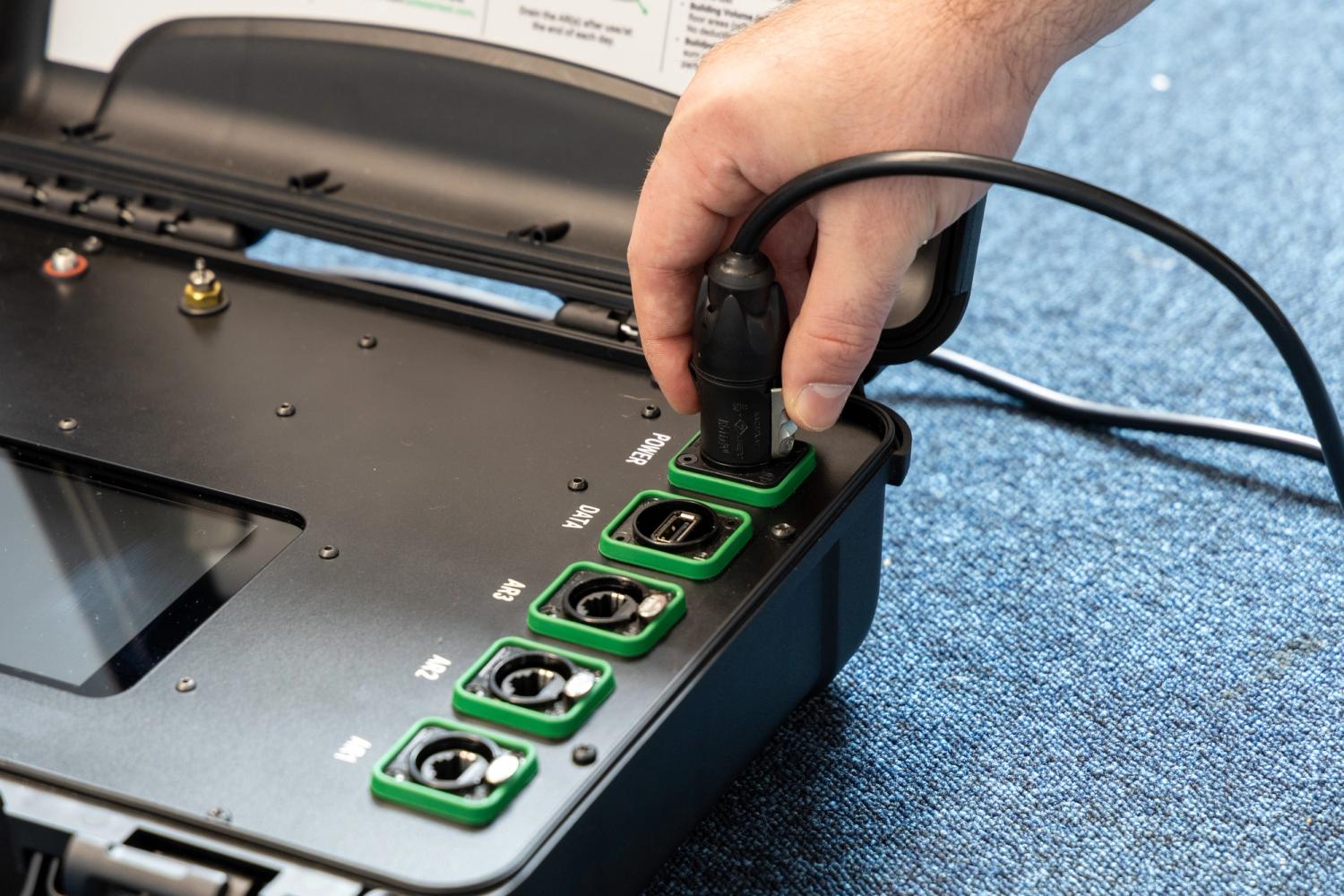
Unplug the power cord from the controller by pulling up the metal locking lever and rotating it to release.
Close the lid and lock the latches into place for secure storage and transportation.
Neatly coil up all cables, leads and hoses to avoid twisting or damaging them. They can be safely stored inside the dedicated storage pockets on the side of the air receiver.
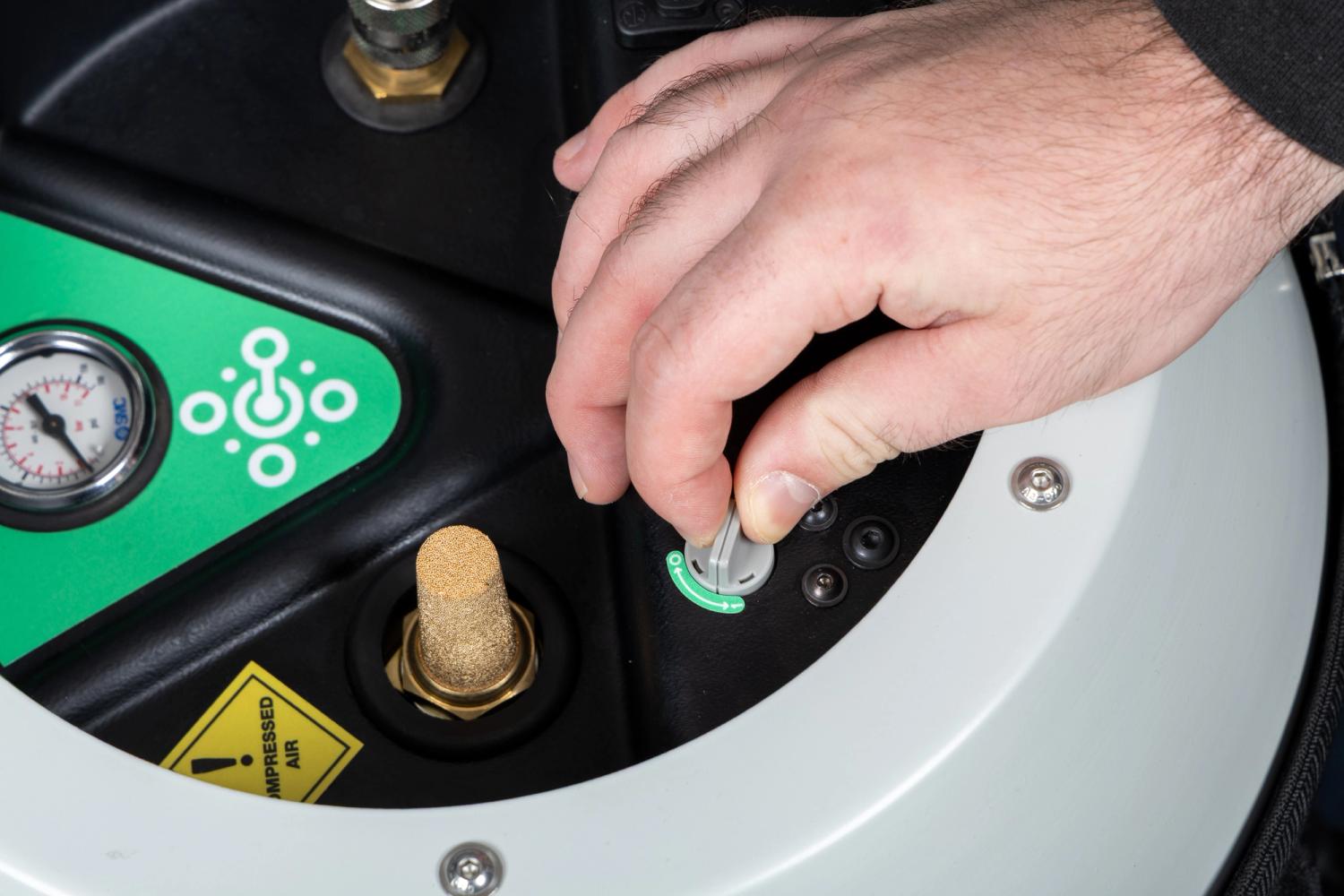
Air receivers should be transported empty of any air for safety reasons. To drain all the remaining air out of an air receiver, turn the drain valve switch to the ON position (1). Once the air has fully escaped, turn the switch back to the OFF position (0).
We recommend that you only drain air receivers once outside, as a small amount of water that has condensed may come out at the same time, potentially damaging carpets or flooring.
Your Pulse system contains sensitive instruments and sensors; the equipment should be handled with care at all times. When transporting in a vehicle, air receivers should be secured in place by strapping or similar.When moving and carrying the equipment, please ensure you have received the correct manual handling training and, if necessary, use lift aids as per your personal requirements.
Build Test Solutions cannot be held liable for any damage to equipment or injury to persons from improper use, handling or moving of equipment. Always conduct a thorough risk assessment for the job you are undertaking.